Garden Clearance in Havering
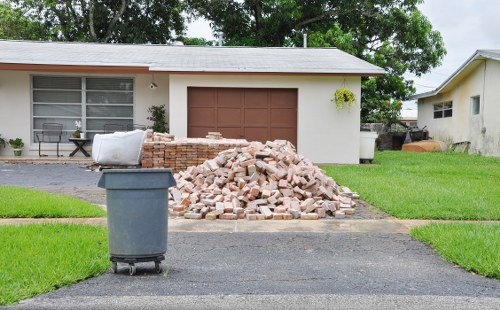
Garden clearance in Havering should make outdoor spaces easier to use, easier to maintain and ready for their next stage without leaving you with a heap of mixed waste to sort through. We clear overgrown borders, broken garden furniture, cuttings, soil, timber, plant pots and other outdoor debris, with a focus on sensible handling and tidy removal. Whether the space is a compact back garden, a shared access plot or a larger property with years of accumulated waste, the aim is the same: a clear, usable result.
Our service covers routine garden tidying as well as heavier clearances after a long period without maintenance. That can include branches, hedge cuttings, rotted fencing, old sheds in pieces, bags of leaves and general outdoor clutter. Where items can be separated for reuse, recycling or disposal, we do that as part of the work rather than leaving everything mixed together. If you need to clear the whole garden or just remove a specific pile of waste, we can shape the work to the job in hand.
For projects that involve more than light green waste, it helps to think about what is staying, what is going and what needs handling carefully. Hard materials, wet compost, broken planters and weathered timber often take more planning than fresh cuttings, and a good clearance saves time later by dealing with each type properly. If you are comparing options, start with the main outcome you want: a cleaner plot, better access, space for landscaping or simply less material to manage. Request pricing details if you would like to discuss the scope.
What we clear from gardens
Garden clearances often involve a mixture of organic waste and old outdoor items, so it helps to use a service that can handle both without treating everything as the same material. Typical work includes hedge trimmings, branches, grass cuttings, weeds, roots, broken garden ornaments, damaged fencing and unused containers. We also clear items that have drifted outdoors over time, such as chipped furniture, children’s play equipment and general yard clutter, provided they are part of the agreed job.
Because garden waste can vary from light and compact to awkward and heavy, the method matters. Fresh green waste compresses differently from dry branches or old timber, and soil or rubble left in bags can change the loading approach completely. When a clearance is planned well, it is easier to keep pathways open, protect surrounding beds and remove materials efficiently. For a fuller picture of related work, see garden clearance alongside the broader waste removal service if your job includes mixed outdoor waste.
If the space includes items no longer needed indoors or in outbuildings, a broader clearance can be more practical than tackling each pile separately. That may involve shifting a few stored objects from the garden, taking away weathered household items that have been left outside, or combining outdoor debris with other removal work on the same visit. In every case, the important point is to make the boundary of the job clear so the right materials are handled in the right way.
Hedges, branches and seasonal cuttings
Seasonal garden work often generates the biggest volume of loose waste, especially after pruning, boundary cutting or a long spell of growth. Hedge trimmings, saplings, ivy, fallen branches and piles of leaves can build up quickly, and they are rarely convenient to leave stacked at the side of a property. We remove cuttings in manageable loads and keep the process practical for gardens where access is narrow or the waste is spread across several areas.
For many customers, the most useful service is not just removal but separation. Fresh green waste, woody material and non-plant items may need different treatment, so a careful clearance reduces the chance of contamination and makes disposal simpler. If you are preparing a larger outdoor project, it is often worth identifying what has been cut back already, what still needs pruning and what is genuinely ready to go. That gives the clearance a firmer shape and helps avoid unnecessary handling.
Some garden jobs are most efficient when the waste is grouped before collection, but that does not mean you need to create perfect piles. A sensible approach is to gather the main material types and leave the rest for inspection. If you are unsure how much material will come from trimming or shaping the garden, you can still ask for a quotation and describe the amount in broad terms. You may also find it useful to separate green waste from heavier items before the removal takes place.
Old garden furniture, sheds and outdoor clutter
Many garden clearances in Havering involve more than plant waste. Worn furniture, broken parasols, rusty metal frames, torn covers, damaged play items and collapsed storage pieces often take up valuable room outdoors. We remove this kind of clutter as part of a straightforward clearance, helping to open up patios, lawns and side returns without turning the job into a piecemeal effort. Where items can be broken down safely, that can make the work cleaner and more efficient.
Old sheds and timber structures can be more involved because they may contain fixings, panels, felt, shelving and mixed materials. The same is true for garden furniture that combines wood, metal and plastic in one item. For customers, the main decision is whether the structure is to be dismantled as part of the clearance or whether only the loose contents are to be removed. Clear instructions make the job more predictable and reduce the risk of leaving behind awkward fragments or hidden waste.
To keep the process straightforward, it helps to note any blocked access, heavy sections or items that should not be shifted with the rest. If a shed or outdoor unit contains reusable tools, gas canisters, paint or other separate contents, these should be identified in advance. Tell us what is staying as well as what is going, and the clearance can be organised around those boundaries. That is often the best way to keep the garden safe, tidy and ready for further work.
Household waste that has moved outdoors
Not every garden clearance is pure garden waste. Over time, many outdoor spaces collect household items that were moved outside temporarily and never brought back in. That might include broken storage boxes, old toys, unused tools, damaged laundry equipment, worn rugs or miscellaneous items from garages and sheds. Clearing these together with the outdoor waste can save time and reduce the number of separate jobs needed to make the space usable again.
This kind of mixed removal works best when the different materials are identified early. Some items can be packed together, while others need individual handling because of weight, shape or composition. It is also common for outdoor clearances to include items that are no longer fit for indoor use but still need sensible disposal rather than being left in a corner of the garden. A clear description of the main loads is usually enough to begin planning the work.
For broader property work, related pages such as home clearance and house clearance can be useful if the garden removal is only one part of a larger decluttering plan. If the job includes items from a loft, garage or internal rooms as well as the outdoor space, coordinating the work can often be simpler than arranging several separate visits. You can still keep the garden as the main priority and treat the other areas as add-ons where needed.
How we plan a garden clearance

A practical garden clearance begins with understanding the type and amount of waste, then matching the removal method to the site. Access matters, but so does the nature of the material: loose branches, bagged leaves, soil, timber and larger pieces all load differently. We use the information provided to decide what the clearance involves and how best to handle it, keeping the work focused on the actual tasks rather than on unnecessary movement.
It is useful to give a clear outline of the garden and the items involved. If a clearance includes more than one area, such as a side passage, shed base or rear yard, say so early. You do not need to write a perfect inventory, but a short description of the main waste types is valuable. The most helpful points are usually these:
- the main materials to be removed
- any awkward access or narrow routes
- whether heavy items are included
- which parts of the garden must be left untouched
For many customers, the important decision is how much preparation to do beforehand. A full tidy is not essential, but separating obvious rubbish from items you want to keep is sensible. If there are fragile pots, sharp edges or partly buried pieces, mention them so they can be approached carefully. A good quotation should reflect the real work involved, so the clearer the description, the easier it is to compare options.
Garden clearance and responsible disposal
Disposal is a central part of any garden clearance, because the value of the service lies not just in moving waste but in managing it properly afterwards. Organic waste, timber, metals, plastics and mixed debris do not all follow the same route. A thoughtful clearance keeps materials separated where possible and avoids unnecessary mixing. That helps the job remain orderly and makes it easier to deal with items that have different disposal requirements.
When a garden contains a wide range of waste, the way it is handled can affect both the time needed and the overall cost. Items that are straightforward to stack and remove are simpler than those that are waterlogged, compressed, broken into small pieces or scattered across the site. If you are looking at a larger clear-out, it may be helpful to combine outdoor waste with related pages such as flat clearance or furniture clearance where those kinds of items are part of the same job.
Clearance work is at its best when it remains practical. That means taking away what has been agreed, leaving the rest of the space in good order and avoiding needless disturbance of usable areas. If you want to reduce the garden to a clean working space, or remove specific waste before another contractor arrives, the work can be set around that aim. The important thing is that disposal is handled as a considered part of the clearance, not as an afterthought.
Getting ready for a quotation
A quotation is usually easier to prepare when the scope is described in plain terms. Let us know whether the job is mostly green waste, mixed garden debris or a combination of outdoor and household items. If there are larger pieces involved, mention them by type rather than trying to estimate exact measurements unless that is easy for you. A few clear notes are often more useful than a long explanation, particularly where the work is straightforward but bulky.
Photographs can help when a garden is cluttered, access is tight or the waste is scattered in several places. They are not a substitute for a good description, but they often make it easier to understand how much material is present and whether anything needs special care. If there are separate piles at different points around the property, a quick explanation of which ones should be removed together can save time. You can also use plain language to note what must stay behind.
If you are ready to move ahead, contact us with the basics of the job and we can discuss the most suitable way to approach it. For customers comparing service types, the related garage clearance page can be helpful when the garden work is linked to outbuilding storage or access problems. The aim is to make the first conversation simple, accurate and focused on what actually needs clearing.
About Havering
Havering is a borough in east London with a varied landscape that combines urban centres, residential districts and significant open land. Its northern edge reaches the Thames marshes and historic riverfront at places such as Rainham, while the western side is shaped by suburban growth around Romford and its surrounding neighbourhoods. The borough takes its name from the historic manor of Havering-atte-Bower, a royal estate recorded in medieval sources and associated with the area’s earlier rural identity. That older character still appears in pockets of woodland, commons and parkland, even as the borough functions as part of Greater London. Romford has long been one of the principal centres, with a commercial core that developed around market activity and transport links. The borough also includes Hornchurch, Upminster and Harold Wood, each with their own local patterns of streets, housing and civic life. In the south-east, the riverside and marsh landscape around Rainham contrasts sharply with the more built-up inland areas, and the boundary between town and open country can still feel close. Havering’s architecture ranges from Victorian terraces and interwar housing to modern estates and contemporary retail developments, while parks, woods and commons provide a strong green presence. Dagnam Park, Bedfords Park and the Thames-side marshes are among the places that show how much of the borough remains tied to open landscape. Transport corridors such as the rail network and major roads connect these districts, but the overall shape of Havering is still defined by its mix of suburb, market town and edge-of-London countryside.
Other clearance work we can combine

Some garden jobs sit alongside other types of property clearance, especially where storage spaces, lofts or internal rooms are being sorted at the same time. In those cases, it can make sense to treat the garden as one part of a larger decluttering plan rather than as an isolated task. Related work may include furniture removal, household waste removal or the clearance of items from an office or garage where they have simply been moved outside over time.
The benefit of combining related jobs is that the waste can be handled in a more orderly sequence. For example, if a garage contains broken shelving, a garden contains old planters and a side passage contains worn furniture, the work can often be grouped into a single clear plan. You can review the broader furniture disposal page if part of the job involves items that are no longer fit for indoor or outdoor use, and the garage clearance page if storage access is part of the issue.
Where a property includes both domestic and outdoor clutter, the main consideration is keeping the scope precise enough to avoid wasted effort. Mixed projects benefit from a short note about what is in each area and which parts are most urgent. This is especially useful where a garden has become the overflow zone for other rooms. A focused removal plan can then be built around the waste that is actually present, rather than around assumptions.
Why a clear scope matters
Garden clearance works best when the scope is set early and kept realistic. That does not mean every item must be listed individually, but it does mean understanding the difference between cuttings, furniture, fittings, rubble and general rubbish. Those categories can change the handling method and the amount of labour required. When the job is clear, the result is cleaner and the quotation is easier to assess on sensible terms.
Where the waste includes mixed materials, timing can matter as much as volume. Wet green waste can be heavier than it looks, old timber may splinter, and stacked items can conceal smaller debris underneath. If there are known awkward pieces, it is sensible to mention them before work begins. The same is true if you want a particular area left untouched, such as planted borders, paving, storage boxes or access to a shed. A clear scope keeps the work efficient and avoids confusion later.
If you are arranging a larger tidy-up and want to compare related removal options, the office clearance and builders waste clearance pages can be useful for mixed properties where outdoor waste sits alongside other removal needs. For a garden-only job, the next step is usually simple: identify the main waste types, check access and ask for a quotation based on the real work required. Tell us what needs to go, and we can take it from there.
Booking a garden clearance in Havering

When you are ready to book, the process is usually quickest if you send a concise description of the job and the main materials involved. That gives enough information to discuss the work without overcomplicating things. If the garden contains a combination of branches, bags, timber, furniture or other outdoor waste, mention that mixture clearly. If access is unusual, note that too, especially where items need to be carried through a narrow side route or around fixed features.
For a practical quote, it also helps to say whether the clearance is a one-off tidy-up, part of a larger move or tied to another project such as landscaping or renovation. That context can affect how the work is arranged, even when the waste itself is straightforward. If you would like a broader removal discussion, the recycling and sustainability page may be useful alongside the main service information, particularly where separating materials is important to you. The key point is to keep the request focused and relevant.
If you are planning a garden clearance in Havering, send the details when you are ready and ask for a quotation that reflects the scope of the work. Request a quotation or simply get in touch to discuss the waste, the access and the outcome you want. The aim is to leave the garden clearer, easier to use and free of the clutter that is getting in the way.